

Muddy Heart Alternatives: Finding Your Perfect Handmade Pottery
Table of Contents
- Why Muddy Heart Alternatives Matter for Thoughtful Gifting
- What Makes a Handcrafted Pottery Gift Worth the Premium Price
- How to Identify Handmade Pottery vs. Mass-Produced Ceramics
- Choosing the Right Handmade Ceramic Vase for Your Space
- Key Differences: Materials, Glazes, and Functional Design
- Customization, Production Timelines, and Returns Across Makers
- Finding Your Pottery Match: A Buyer's Framework
- Frequently Asked Questions
Last Updated: October 21, 2026
Why Muddy Heart Alternatives Matter for Thoughtful Gifting
When you're searching for a Muddy Heart alternative for pottery, you want a handcrafted piece that feels personal, not mass-produced, a gift with a story, not a big-box price tag. The challenge is knowing where to look and how to spot the real thing.
At Flow Art Studios, we understand this tension: artisanal quality without overpaying for hype. This guide shows you how to evaluate Muddy Heart alternatives, identify authentic handmade ceramics, and choose a piece that matches your budget, timeline, and aesthetic.
The pottery market has fractured: industrial production on one end, small home-studio makers on the other, and a crowded middle ground of sellers claiming "handcrafted" when they mean "hand-assembled." Understanding the difference changes your purchase decision.
What Makes a Handcrafted Pottery Gift Worth the Premium Price
Handmade ceramics cost more than mass-produced alternatives, the first objection most buyers raise. But the premium exists for concrete reasons, not marketing spin.
When a potter hand-throws a vessel, they make dozens of micro-decisions: clay thickness varies, glaze pools differently, no two handles sit the same way. That inconsistency is the signature of authentic handwork, and why each piece has character.
Mass production eliminates this variation through molds, spray glazing, and standardized firing. The result looks polished but feels sterile.
The price difference reflects labor, material waste, and skill development. A potter hand-building a ceramic vase spends 4-6 hours per piece across clay prep, forming, drying, glazing, and firing; a factory produces 50 identical units in the same timeframe.
Handmade pieces also often use higher-quality clay bodies. Stoneware and porcelain fired at proper temperatures develop durability cheaper earthenware can't match.
How to Identify Handmade Pottery vs. Mass-Produced Ceramics
The easiest way to spot a fake "handmade" claim is to look at the bottom of the piece.
Check the interior glaze too: hand-poured or hand-brushed glazes vary, while industrial spray glazing looks uniform and perfect. If the inside of a mug looks like it came from a factory spray booth, it probably did.
Ask the maker directly. Legitimate potters can describe their process, wheel-thrown versus hand-built, clay type, firing temperature, glaze ingredients, and explain why each piece differs. Vague answers or marketing language mean move on.
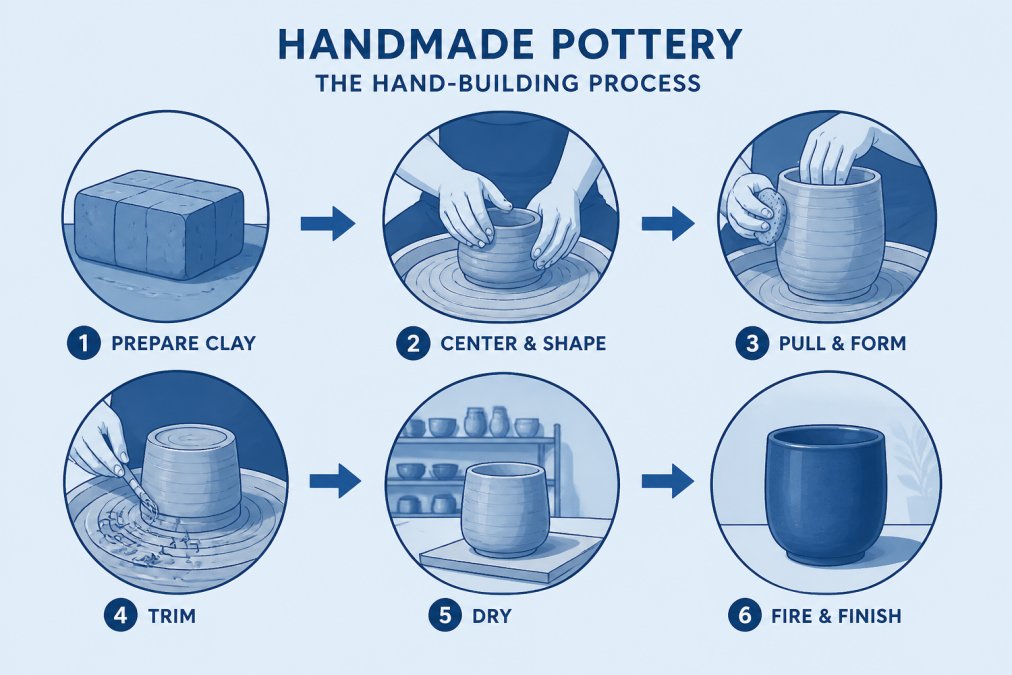
Request photos of their studio. Legitimate makers are proud of their setup and will share images of clay, kiln, and work-in-progress pieces. No studio photos, no process documentation, and no willingness to share their space usually means dropshipping from a factory.
Choosing the Right Handmade Ceramic Vase for Your Space
A ceramic vase isn't just a container for flowers, it's a statement piece that sets a room's tone. Shopping for a Muddy Heart alternative adds a layer: you're not just picking a shape and color, you're picking a maker whose style, materials, and production model differ from a single brand. That's where most buyers get stuck.
Start with proportion. A tall vessel works in corners and beside entryways; a squat, wide-mouthed vase anchors a side table. Measure your space and account for your flowers, long-stemmed arrangements need height, while wildflowers work in almost anything.
Color matters more than most people think, and it's where alternatives diverge most. Neutral finishes (cream, soft gray, natural clay tones) work everywhere and age beautifully; muted blue or green glazed interiors add subtle personality; bold colors are harder to live with long-term.
Consider function alongside aesthetics. A narrow neck holds water better for cut flowers; a wide opening suits dried arrangements or sculptural display. Some handmade pieces are decorative only and don't hold water, confirm in the listing rather than assuming.
Evaluate the vase against the maker's production model, not just the product photo. Practical patterns to compare:
- Wheel-thrown vs. hand-built. Wheel-thrown vases tend to have more symmetry and a visible foot ring; hand-built (slab or coil) pieces are often more sculptural and irregular. Neither is better, but if you want a clean silhouette, favor wheel-thrown makers.
- Glazed interior vs. unglazed. For any vase that will hold water, a glazed interior is non-negotiable. Unglazed interiors absorb moisture and can weep or stain over time.
- Foot ring and base finish. A felted or sanded base protects furniture. Ask whether the maker finishes the bottom, it's a small detail that separates careful studios from rushed ones.
- Capacity and opening diameter. A vase listed as "8 inches tall" tells you nothing about whether it will hold a grocery-store bouquet. Ask for opening diameter and approximate capacity.
When comparing alternatives, request a photo of the exact piece you'll receive, not just a catalog shot. Small studios often photograph one sample and ship a sibling; asking for the specific unit's photo is a reasonable request and a good test of how a maker communicates.
Key Differences: Materials, Glazes, and Functional Design
Not all clay is created equal. Stoneware is the most common choice for functional pottery: durable, fired at moderate temperatures, and dishwasher- and microwave-safe when properly glazed.
Earthenware is softer and more porous, beautiful but less durable, often needing hand-washing and absorbing liquids over time. Better for decorative pieces than daily-use drinkware.
Porcelain is the premium option: harder, whiter, fired at higher temperatures, holding heat longer and feeling more refined, but more expensive and more fragile if dropped.
Glazes determine aesthetics and function. A glazed interior is essential for any piece that holds liquid, without it, raw clay absorbs water and eventually breaks down, and it makes cleaning easier.
Matte glazes absorb light and feel softer; glossy glazes reflect light and feel more formal; textured glazes add visual interest but are harder to clean.
Some makers pair raw, unglazed exteriors with glazed interiors, a natural clay aesthetic outside, full function inside. It works well for vases and decorative pieces.
| Material | Durability | Best For | Care |
|---|---|---|---|
| Stoneware | High | Daily use, drinkware | Dishwasher-safe when glazed |
| Earthenware | Medium | Decorative pieces, display | Hand wash recommended |
| Porcelain | Very high | Formal pieces, heirlooms | Hand wash preferred |
Functional design includes practical details: a foot ring to prevent scratching, a smooth or textured rim, a comfortable handle on drinkware. These separate thoughtful design from rushed production.
Customization, Production Timelines, and Returns Across Makers
When you order a Muddy Heart alternative, you're often ordering made-to-order rather than buying stock. This changes everything about expectations.
Most small potters work on 4-8 week timelines, batching their work, throwing in one session, glazing in another, firing in batches. Need something in two weeks? You're paying a rush fee or waiting longer.
Customization varies widely. Some makers adjust dimensions (taller, wider, smaller vases); others change glaze colors within their existing palette. Few will completely redesign a piece for a single order. Ask before assuming.
Timelines depend on current workload, a maker with a three-month backlog may run longer than quoted. Reputable makers communicate delays upfront; if you don't hear updates, follow up.
Returns are where many small makers diverge from retail norms. Most don't accept returns on custom or made-to-order pieces, once it's fired, it can't be unmade. Some replace pieces that arrive damaged; others won't.
Shipping pottery adds complexity. Handmade ceramics are fragile, so reputable makers pack carefully with significant padding, expect $15-40 for a single mug or vase depending on distance.
Ask about the return window: thirty days is standard retail, many small makers offer 14, and some offer none on custom work. That's a legitimate business decision, not a red flag, just know what you're agreeing to.
Finding Your Pottery Match: A Buyer's Framework
Choosing a pottery maker comes down to five criteria. Compare options side by side rather than one at a time, that's how most buyers accidentally overpay or under-buy.
1. Authenticity verification. Can you see the maker's studio? Do they document their process and explain their materials?
2. Timeline alignment. When do you need the piece?
3. Aesthetic fit. Does the maker's style match your space? Look at their full portfolio, not one piece. If you're forcing yourself to like it, it's not the right maker.
4. Price-to-value ratio. Compare similar pieces across three or four makers. If one is significantly cheaper, ask why, thinner clay, lower firing temperature, or a simpler glaze can explain it.
5. Communication and logistics. How do they respond to questions, helpful or dismissive, promptly or not?
Be explicit about the details that separate a smooth purchase from a frustrating one:
- Shipping and packing. Reputable makers pack fragile ceramics carefully with significant padding, so expect roughly $15-40 for a single mug or vase depending on distance and carrier. Ask whether shipments are insured.
- Returns and refunds. Most handmade pottery sellers don't accept returns on custom or made-to-order pieces, once it's fired, it can't be unmade. Some makers will replace a piece if it arrives damaged; others won't. Read the policy before ordering. Thirty days is standard retail; many small makers offer 14 days; some offer no returns on custom work. This is a legitimate business decision, not a red flag, just know what you're agreeing to.
- Customization. Some makers adjust dimensions; others change glaze colors within their palette; few redesign a piece for a single order. Ask before assuming, and get customization in writing.
- Location and delivery. A local studio may allow in-person pickup, skipping shipping risk; an international maker may add customs fees and longer transit. Weigh total landed cost, piece price plus shipping plus duties, not just the listed price.
Unglazed interiors in functional pieces are a red flag. A maker selling you a mug without a glazed interior either doesn't understand pottery or doesn't care about usability. Avoid it.
Flow Art Studios uses this same framework when curating our handcrafted pottery collection, working with makers who prioritize transparency, quality materials, and genuine craftsmanship. Our ocean-inspired pieces reflect those values: intentional design and authentic materials.
When evaluating a Muddy Heart alternative for pottery, remember the cheapest option isn't always the best value and the most expensive isn't always justified.
Frequently Asked Questions
What should I look for in a handmade pottery alternative to Muddy Heart?
Prioritize authenticity markers: visible hand-building techniques, irregular glaze application, and maker transparency about production methods. Check for small-batch or made-to-order practices, material disclosure (stoneware vs. earthenware), and clear care instructions. Verify the maker's location, production timeline, and return policy. Genuine handcrafted pottery shows natural variation rather than uniformity. Ask the maker directly about their process, transparent artisans welcome questions about their techniques and materials.
How can I tell whether a piece of pottery is handmade?
Examine the base for fingerprints, tool marks, or uneven surfaces that indicate hand-throwing or hand-building. Look for slight asymmetry in shape and glaze application, handmade pieces vary slightly piece to piece. Check for a smooth interior if it's wheel-thrown, and inspect glazing for natural pooling or drips rather than uniform coating. Handmade pieces typically weigh more than mass-produced ceramics due to thicker walls. Ask for production photos or videos, and verify the maker offers customization or made-to-order options, which mass producers typically don't.
Why are handcrafted pottery gifts more expensive than store-bought options?
Handcrafted pottery reflects labor-intensive production: hand-building or wheel-throwing, hand-glazing, and individual kiln-firing. Each piece requires skill development and experience. Small-batch makers cannot achieve the economies of scale that mass manufacturers use. Quality materials, high-fire stoneware, artist-grade glazes, and sustainable sourcing, cost more than industrial alternatives. The premium also reflects the maker's time for custom requests, quality control, and sustainable practices. You're investing in durability, uniqueness, and support for artisans rather than mass-production systems.
What's the typical production time for made-to-order handmade ceramics?
Most small-batch pottery makers require 4-8 weeks for custom orders, depending on kiln schedules and order volume. Standard pieces from existing inventory ship faster, typically 1-2 weeks. Production time accounts for hand-building or throwing, drying, glazing, kiln-firing, and quality checks. Rush orders may incur additional fees. Always confirm the maker's current timeline before ordering, especially for gifts with deadlines. Some makers maintain ready-made stock for faster shipping, while others work exclusively to order. Check the maker's website or contact them directly for accurate estimates.