

Coastal Decor Ideas for Beach Houses: 7 Ways to Create Your Seaside Retreat
Table of Contents
- Coastal Decor Ideas That Define Beach House Living
- Modern Coastal Decor: Avoiding Clichés and Visual Clutter
- Coastal Color Palette: Soft Blues, Neutrals, and Natural Tones
- Beach House Living Room Ideas: Layered Textiles and Natural Materials
- Coastal Bedroom Decor: Creating a Relaxed Seaside Retreat
- Durable Materials for Salt Air and Humidity
- Ocean-Inspired Accessories and Handcrafted Finishing Touches
- Frequently Asked Questions
Last Updated: October 14, 2026
Coastal Decor Ideas That Define Beach House Living
Creating a coastal home that feels authentic requires more than just hanging nautical signs and painting walls blue. True coastal decor ideas for beach houses balance inspiration with livability, blending natural materials, durable textiles, and ocean-inspired accessories into spaces that actually work for daily living in salt-air environments.
At Flow Art Studios, we understand what draws people to coastal living: the relaxed atmosphere, the connection to nature, and the sophistication of understated elegance. The best coastal interiors capture that feeling without veering into cliché.
This guide covers seven practical approaches to coastal decor that work whether you're decorating a permanent beach home or a seasonal retreat. We'll walk through room-specific ideas, material choices that actually survive coastal conditions, and finishing touches that tie everything together.
Modern Coastal Decor: Avoiding Clichés and Visual Clutter
The biggest mistake in coastal decorating is treating it like a theme rather than a lifestyle. Too many beach houses fall into visual clutter by mixing every ocean reference available: starfish wall art, anchor throw pillows, rope-wrapped everything, and color schemes that feel more novelty shop than home.
Modern coastal decor strips away the excess. It focuses on quality over quantity, natural materials over manufactured "beach vibes," and restraint over maximalism. A single statement piece, a driftwood mirror, a handcrafted ceramic vessel, or a carefully curated collection of shells, carries more impact than a room full of beach-themed accessories.
The key is selecting pieces that serve a purpose. A rattan chair isn't just coastal; it's functional seating. A linen throw pillow isn't just on-trend; it's practical for a humid environment. When every item in your space has both aesthetic and functional value, the room feels intentional rather than decorated.
Interior design principles for coastal homes emphasize this balance between form and function. The most successful beach houses prioritize durability and livability alongside visual appeal.
Coastal Color Palette: Soft Blues, Neutrals, and Natural Tones
Color sets the tone for any coastal interior. Rather than bright, saturated blues that scream "beach resort," sophisticated coastal color palettes use soft, muted tones inspired by actual beach environments: pale blues, warm whites, soft grays, and natural sand tones.
Start with a neutral base. Walls in soft white, warm beige, or pale gray create a calm foundation that lets natural light do the work. These neutrals also make the space feel larger and more serene, essential when you're working with smaller beach cottages or rental properties.
Layer in accent colors through textiles and accessories. Soft blue-gray tones, seafoam, and dusty sage work beautifully without overwhelming a space. The goal is colors that feel like they belong in a coastal environment, inspired by water, sky, and sand, rather than colors that announce themselves loudly.
Avoid pure white, which can feel sterile in bright coastal light. Instead, choose warm whites with subtle undertones. Similarly, avoid navy and bright turquoise unless used sparingly as accents. The most sophisticated coastal homes use color restraint as their defining characteristic.
Beach House Living Room Ideas: Layered Textiles and Natural Materials
The living room is where coastal decor has to work hardest. It's the room that takes the most traffic, the most sand, and the most sun, and it's also the room guests judge first.
Start with the sofa, then build outward. A slipcovered sofa in a performance linen or solution-dyed acrylic is the single most practical anchor for a beach house living room.
Layer textiles in three weights. The layered look that defines coastal interiors comes from mixing three distinct weights, not from piling on pillows.
Choose furniture that can handle humidity. Rattan, seagrass, and cane are the obvious coastal choices, but not all rattan is equal. Look for frames with a sealed or lacquered finish, which resists the swelling and mildew that plague unfinished natural fibers in coastal humidity.
Rethink window treatments for glare and salt. Most coastal decor guides skip this, but it's the detail that separates a livable beach house from a hot, faded one. Sheer linen or cotton panels filter harsh afternoon light without blocking the view, and they can be laundered when salt residue builds up.
Add one statement piece, not five. A driftwood coffee table, a large-scale ocean photograph, or a single handcrafted ceramic vessel gives the room a focal point. The mistake is treating every surface as a display opportunity.
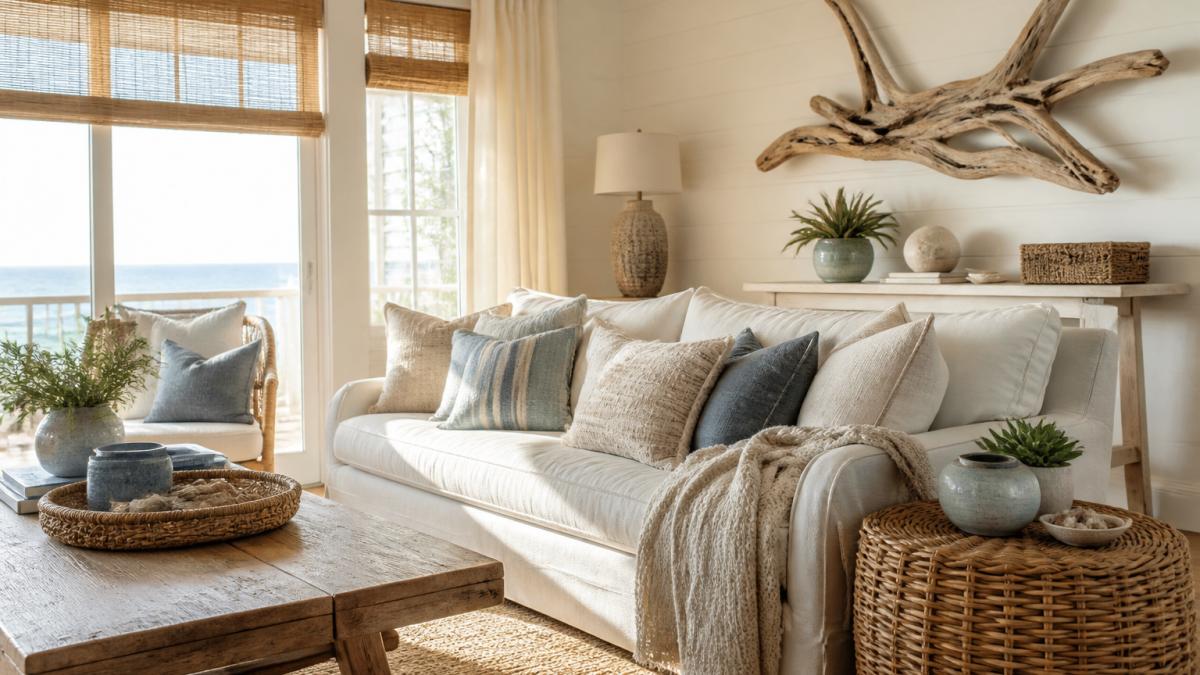
Interior design principles for coastal homes reinforce the balance between form and function that makes a beach house living room work day to day.
Coastal Bedroom Decor: Creating a Relaxed Seaside Retreat
Your bedroom should feel like a true sanctuary, a space designed for rest and relaxation. Coastal bedroom decor prioritizes comfort, soft textures, and a color palette that promotes sleep and calm.
Layer your bedding with natural, breathable fabrics. A linen duvet in white or soft gray serves as your base. Add layers with cotton sheets, a lightweight linen throw, and pillows in varying textures. The goal is a bed that looks inviting and feels comfortable, no heavy, ornate bedding that traps humidity.
Keep the color palette minimal. Stick to whites, soft grays, pale blues, and natural wood tones. These colors create a serene environment that supports rest. Avoid patterns and busy prints that can feel visually stimulating in a bedroom.
Incorporate natural materials through nightstands, a wooden headboard, or woven wall hangings. Seagrass baskets for storage maintain functionality while adding texture. Keep accessories minimal: perhaps a single piece of coastal-inspired art, a handcrafted pottery piece, or a collection of smooth stones in a simple bowl.
Lighting is crucial in coastal bedrooms. Install dimmer switches so you can adjust light throughout the day. Consider sheer linen curtains that filter harsh morning light while maintaining privacy. A simple wooden or rattan bedside lamp completes the look without adding visual clutter.
Durable Materials for Salt Air and Humidity
Most coastal decor articles treat materials as an aesthetic choice. In a beach house, they're a durability decision first. Salt air accelerates corrosion, humidity warps and swells wood, and UV light fades fabrics faster than almost anywhere else. Choosing the right materials upfront is the difference between decor that lasts a decade and decor you replace every other summer.
Why salt air is so hard on materials. Airborne salt particles settle on surfaces and, when combined with moisture, create a mildly corrosive film. This is why untreated iron and standard steel hardware pit and rust quickly near the coast, and why even indoor metal fixtures can degrade faster in a beach house than in an inland home. The fix isn't to avoid metal, it's to choose metals that form a protective patina or are inherently corrosion-resistant.
Metals that survive the coast:
- Stainless steel (316-grade marine grade), the gold standard for coastal hardware, fixtures, and outdoor furniture frames.
- Brass and bronze, develop a living patina rather than rusting; unlacquered brass is a popular coastal choice for faucets and cabinet pulls.
- Powder-coated aluminum, lightweight, rust-proof, and ideal for outdoor or covered-porch furniture.
- Avoid: untreated iron, standard carbon steel, and cheap chrome-plated hardware, all of which pit and flake in salt air.
Woods that hold up:
- Teak, naturally oily and rot-resistant; the classic choice for coastal furniture and decking.
- Cedar and cypress, naturally rot-resistant and more affordable than teak.
- Reclaimed or weathered wood, already stabilized by age and exposure; a good fit for accent tables and shelving.
- Avoid: particle board, MDF, and veneered furniture. In coastal humidity these swell, delaminate, and warp, often within a single season.
Textiles and finishes. Solution-dyed acrylics and performance fabrics resist fading and mildew far better than untreated natural fibers, and they dry quickly after a wet swimsuit or a rainy afternoon. For paint and stain, look for products labeled for coastal or marine use, they're formulated to resist salt spray and UV damage. A common pattern among coastal homeowners is to repaint exterior trim and doors every few years rather than every decade, simply because salt air breaks down standard finishes faster.
Room-by-room material priorities:
- Living room: slipcovered performance fabric sofa, teak or rattan accent tables, brass or stainless hardware.
- Bedroom: linen and cotton bedding (breathable and washable), wooden or rattan nightstands, no veneered dressers.
- Kitchen and dining: sealed stone or quartz counters, stainless or brass fixtures, teak or powder-coated aluminum dining chairs.
- Bathroom: marine-grade stainless or brass fixtures, teak or bamboo bath accessories, quick-dry cotton or waffle-weave towels.
Material durability in coastal construction confirms that material selection directly impacts longevity in salt-air environments. Investing in coastal-appropriate materials upfront almost always costs less than replacing degraded pieces every few years.
Ocean-Inspired Accessories and Handcrafted Finishing Touches
Accessories are where personality enters your coastal home. Rather than mass-produced beach decor, choose handcrafted pieces that reflect genuine coastal aesthetics and support artisanal makers.
A piece like the Resin Ocean Ring Dish ($22.95) serves as both functional jewelry storage and a beautiful accent that incorporates real sand, ocean rocks, and shells, creating genuine coastal connection rather than manufactured approximation.

For wall decor, choose pieces thoughtfully. A large-scale photograph of coastal landscapes, a handcrafted wooden mirror with natural finish, or a collection of framed botanical prints work better than generic nautical signs.
Incorporate natural elements sparingly. A bowl of smooth stones collected from local beaches, a few pieces of driftwood arranged on a shelf, or pressed seaweed in a simple frame add authentic coastal character.
For seasonal decor, handcrafted ornaments add personality.
Storage and function shouldn't be overlooked. A woven basket for blankets, a wooden shelf for displaying collected shells or pottery, or a simple wooden box for organizing beach finds all serve practical purposes while maintaining aesthetic cohesion.
Artisanal home decor trends highlights how handcrafted pieces have become central to sophisticated coastal interiors. Genuine craftsmanship resonates more than manufactured approximations.
Creating coastal decor that reflects your love of beach living requires thoughtful material selection, color restraint, and genuine finishing touches.
Flow Art Studios specializes in ocean-inspired handcrafted pieces designed for exactly this purpose.
Frequently Asked Questions
How do you decorate a beach house without making it look too nautical or clichéd?
Focus on a refined coastal color palette of soft blues, warm neutrals, and whites rather than heavy nautical themes. Choose quality natural materials like rattan, seagrass, and aged driftwood instead of mass-produced seashell décor. Layer textures thoughtfully through linens and organic fabrics. Handcrafted pieces like artisanal ornaments with real sand and resin add personality while maintaining sophistication. The key is restraint: select fewer, higher-quality coastal decor items that reflect your personal style rather than filling every surface with beach-themed accessories.
What materials work best for beach house interiors in salt air and humidity?
Prioritize materials that resist moisture and salt corrosion. Linen and cotton textiles are breathable and resist mildew when properly maintained. Avoid untreated metal fixtures and delicate finishes that corrode quickly near the ocean. Resin-sealed decorative bowls with real sand and shells offer authentic seaside aesthetics.
How can coastal bedroom decor create a relaxed, seaside atmosphere?
Start with soft, neutral bedding in natural fabrics like linen and cotton in shades of cream, soft blue, and warm sand tones. Layer textures with woven throws and organic-textured pillows to evoke a laid-back coastal vibe. Incorporate natural materials like rattan headboards or driftwood accents. Keep window treatments simple, sheer curtains allow natural light while maintaining privacy. Add subtle ocean-inspired accessories like a small handcrafted ornament on a shelf or a coastal-themed artwork. The goal is a serene, minimalist space that feels like a seaside retreat without overwhelming the senses.
What's the difference between coastal and modern coastal decor styles?
Coastal decor traditionally emphasizes relaxed, beachy aesthetics with visible textures and layers. Modern coastal decor strips away excess ornamentation, focusing on clean lines, minimalist design, and curated natural materials. Modern coastal homes use the same soft blues and neutral colors but with a more intentional, gallery-like approach to spacing and arrangement. Rather than filling shelves with numerous beach-themed items, modern coastal style selects fewer, higher-quality pieces, like artisanal handcrafted ornaments or sculptural driftwood, that make a statement. This approach prevents the tired, dated feel of overstuffed beach house décor.